27 buying signals across 400+ accounts. A $150K opportunity in the first 60 days.
Signal-based account intelligence for a Series A identity security company.
Schedule a Conversation- Client
- Series A identity security company
- Engagement
- Fractional GTM operator, embedded
- Problem
- Two reps, 400+ target accounts, limited visibility into which accounts were in market
- Build
- SandsDX Signal Engine, built in Clay, wired to Salesforce and Outreach, running on the client's ICP, buying committee personas, and new positioning
- Result
- A $150K opportunity within 60 days of launch, from an account that wasn't being worked
Two reps. 400+ accounts. No way to know which ones were in market.
The client ran a focused sales motion: two reps covering more than 400 target accounts, 200+ per rep. The reps lacked visibility into what accounts were in market and how to prioritize outreach. The company had also repositioned around a new category story, and the revenue system needed to carry it to the market.
Identity security buyers show up in signals before they show up in a buying process. A breach, a new CISO, a failed audit, a hiring spike in security roles. The client needed a system that watched for those moments and told the new story at every touch.
Signal to story to pipeline
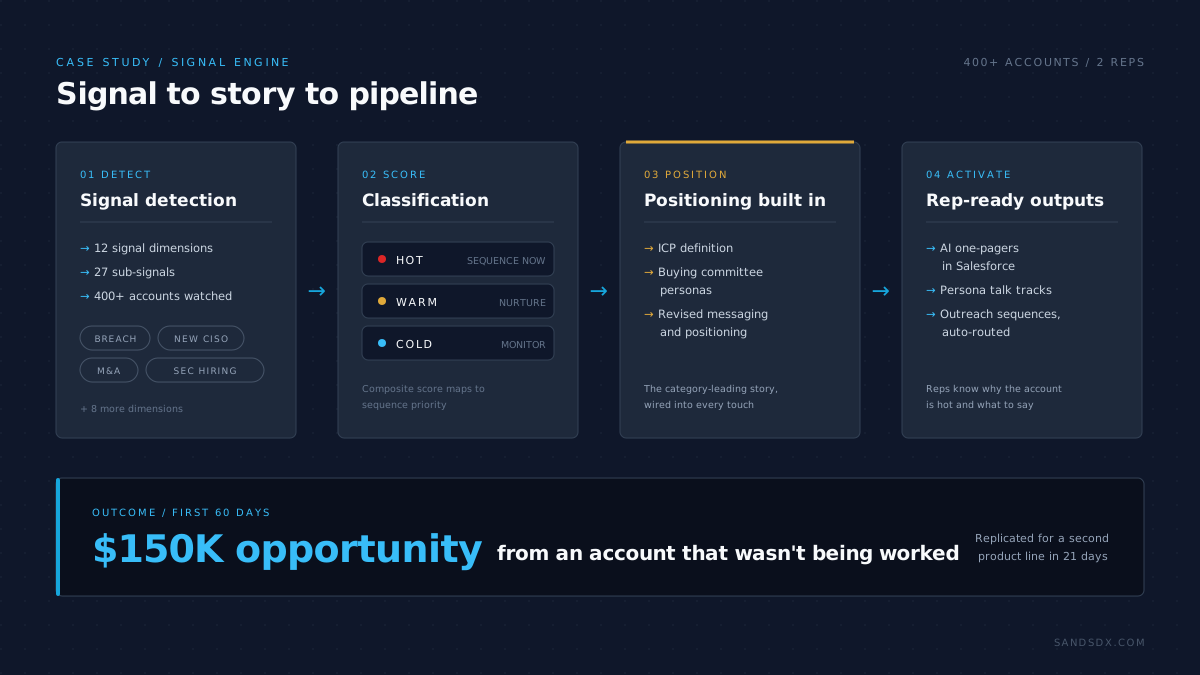
Signal Engine is a SandsDX system; this was its first deployment. It monitors every target account, scores each on the signals that precede a buying process, and routes qualified contacts into sequences. I architected the system, built the requirements, and then directed the core build with a specialist Clay partner.
The system runs on 8 Clay tables and a 43-step workflow:
Signal detection
12 signal dimensions, 27 sub-signals. Security breaches, new CISO appointments, M&A activity, failed audits, security hiring, rapid headcount growth, SEC cyber risk disclosures, and contact-level security engagement.
Scoring and classification
Every account gets a composite score and a HOT, WARM, or COLD classification that maps to sequence priority.
Positioning built in
Built on the client's ICP, buying committee personas, and new messaging and positioning. Enablement and sequences carry the client's category-leading story, matched to account and persona.
AI account one-pagers
Each scored account gets a generated summary with signal drivers, a suggested first line, and a talk track written for the persona. Reps open Salesforce and know why the account is hot, who is on the buying committee, and what to say.
Salesforce integration
Classification, score, summary, and detected signals push to Account objects. Reps work from filtered Salesforce views.
Outreach automation
Qualified contacts route into Outreach sequences automatically. The first 100 accounts were processed on day one.
$150K
opportunity within 60 days of launch, from an account that wasn't being worked
The machine surfaced revenue the humans would have missed.
The build proved repeatable. When the client launched a new product line, we replicated the system in 21 days with only minor adjustments.
Reps open Salesforce and know why the account is hot, who is on the buying committee, and what to say.
Three reasons the system produced
Signal beats coverage
Signal-based prioritization beats coverage-based outreach. Signal Engine concentrated two reps' effort on the accounts showing breach events, leadership changes, and security hiring, the moments when identity security budgets open.
No new tool, no new habit
The system writes to where reps already work. Scores, signals, and talk tracks land in Salesforce. Adoption required no new tool and no new habit.
The new story at every touch
The client had rewritten their positioning, and Signal Engine carried the new story into the revenue system. The ICP, the buying committee personas, and the new messaging showed up in every one-pager and sequence a rep touched. Most companies reposition while their revenue systems keep telling the earlier story. This build closed that gap: every buyer touch told the new story.
The thinking behind the build, and what I would change, is in the signal-based selling field notes.
Is your revenue system still telling last year's story?
The fix starts with finding where. I'll tell you what I see in the data and whether I can move your pipeline.
Schedule a Conversation